Today’s Negligent Yet Truly Morbid Fact!
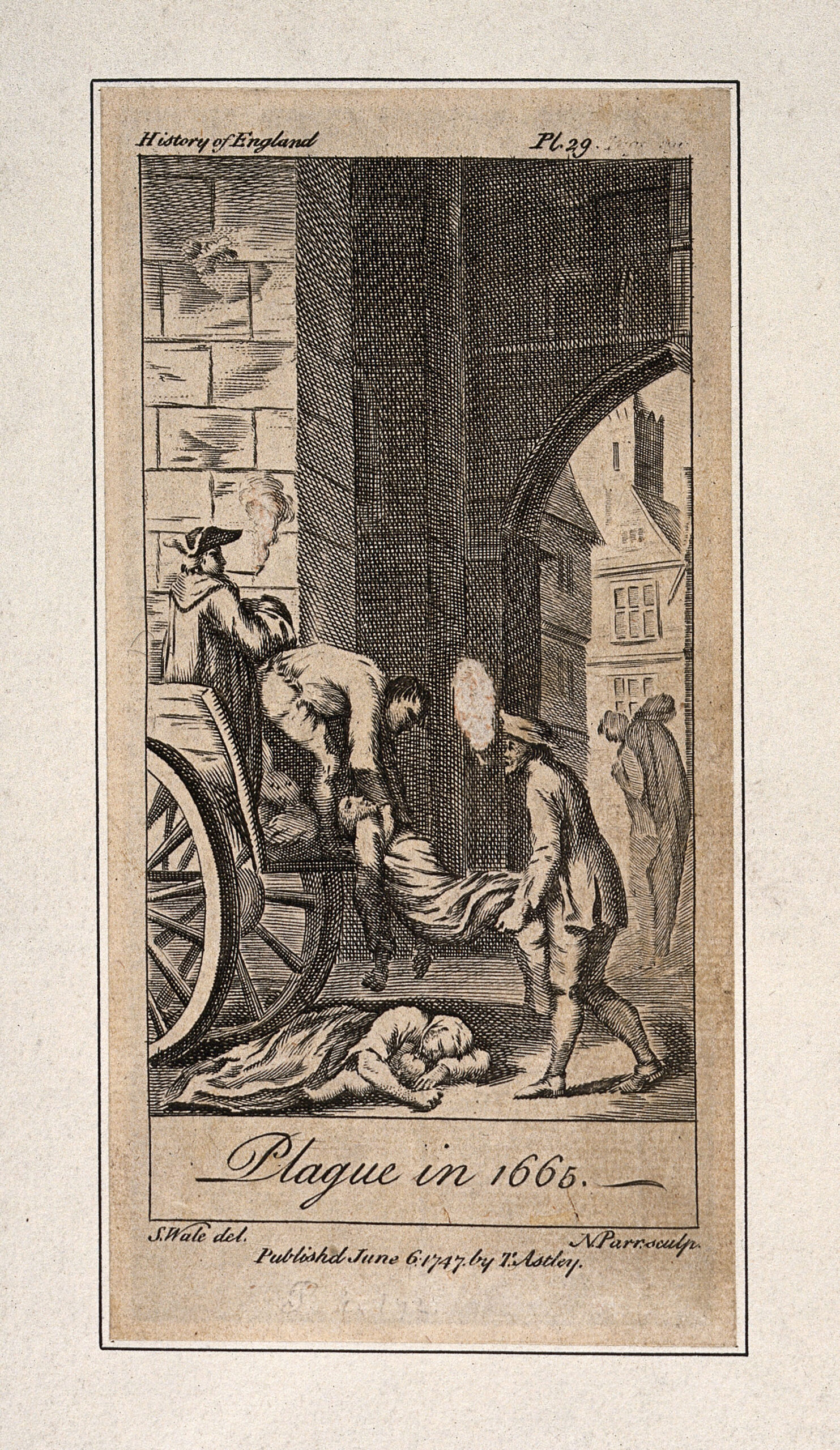
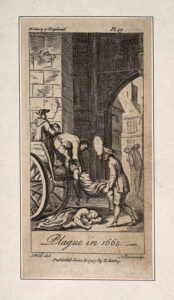
In England, during the 1604 and 1665 plague epidemics, persons believed to be profiting from the disease incurred much hatred and distrust, and doctors as well as keepers of the sick were accused of killing people or deliberately burying them alive. In the 1665 epidemic, a butcher in Newgate Market thought to be dead was not taken away from his room, because of the negligence of the corpse bearers. He returned to life during the night, came downstairs, and complained to a little girl that he felt cold. Another story tells of a poor simpleton piper who had passed out in the street after having had too much to drink in a public house. When the corpse cart came by to pick up a corpse from the house next door, the men threw the piper’s lifeless body onto the cart as well, believing him to be yet another plague corpse. One version of the tale has the piper making his resurrection known by playing his instrument! Daniel Defoe spoke to the man who drove the cart, however, and found out the truth. The unconscious piper, buried under a heap of corpses, had suddenly shouted, “Hey! Where am I?,” when the cart was unloaded at the Mount Mill plague pit. The men were frightened, believing that he was a ghost, but one of them said, “Why, you are in the dead-cart, and we are going to bury you!” The simple piper replied, “But I ain’t dead though, am I?” which made them laugh. The poet William Austin spoke for many when he wrote,
Wisely they leave graves open for the dead
‘Cause some too early are brought to bed.
One out of trance return’d, after much strike,
Among a heap of dead, exclaims for life.
One finding himself as some maid hard lace’t,
Or as a watch for pocket , straightly case’t,
Equaly terrif’d with pain and fear,
Complains to those can neither speak nor hear.
Culled from: Buried Alive: The Terrifying History of Our Most Primal Fear by Jan Bondeson
Suicide Du Jour!
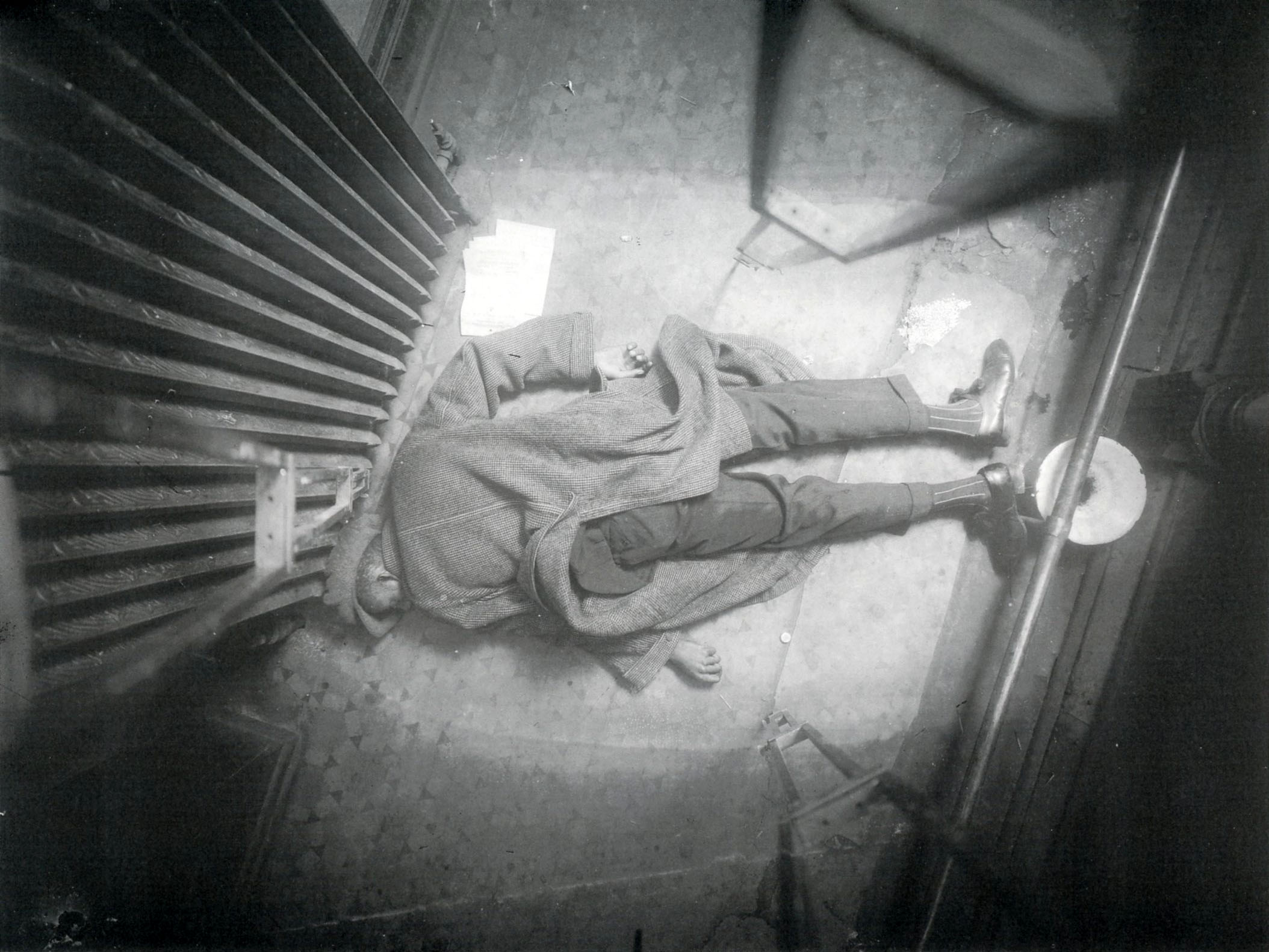
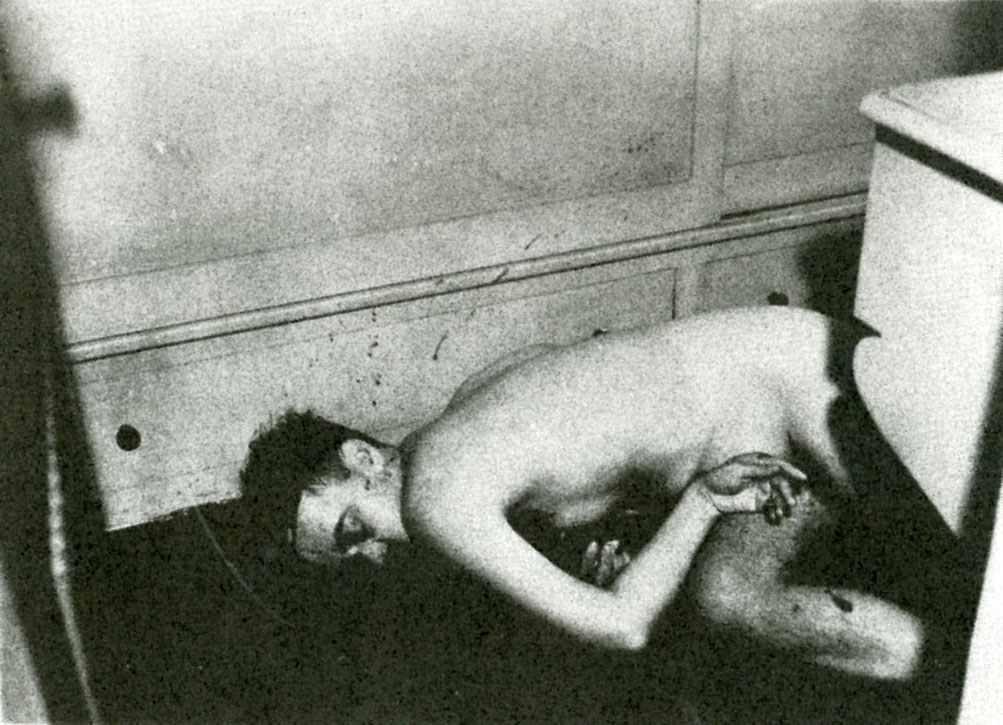
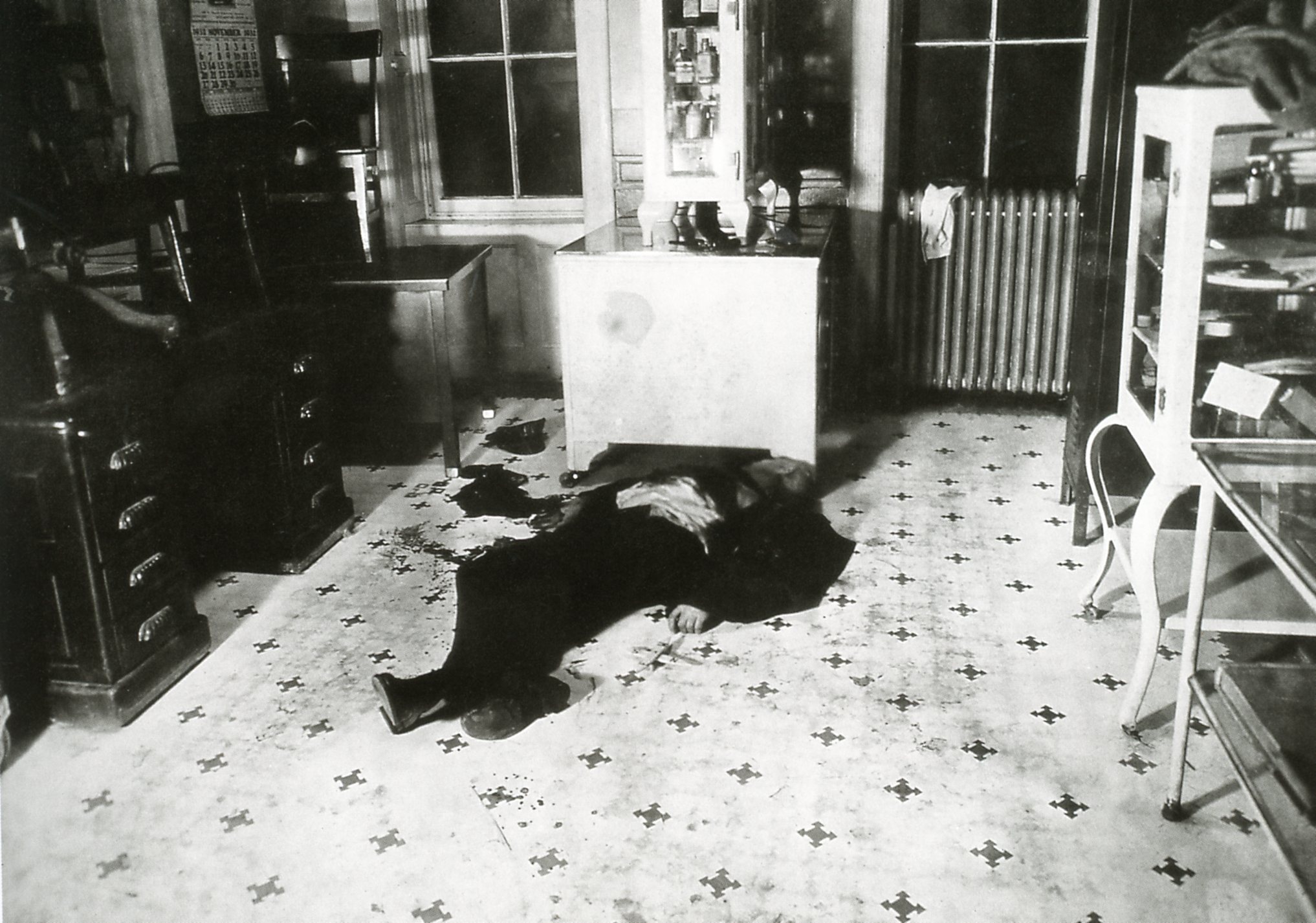
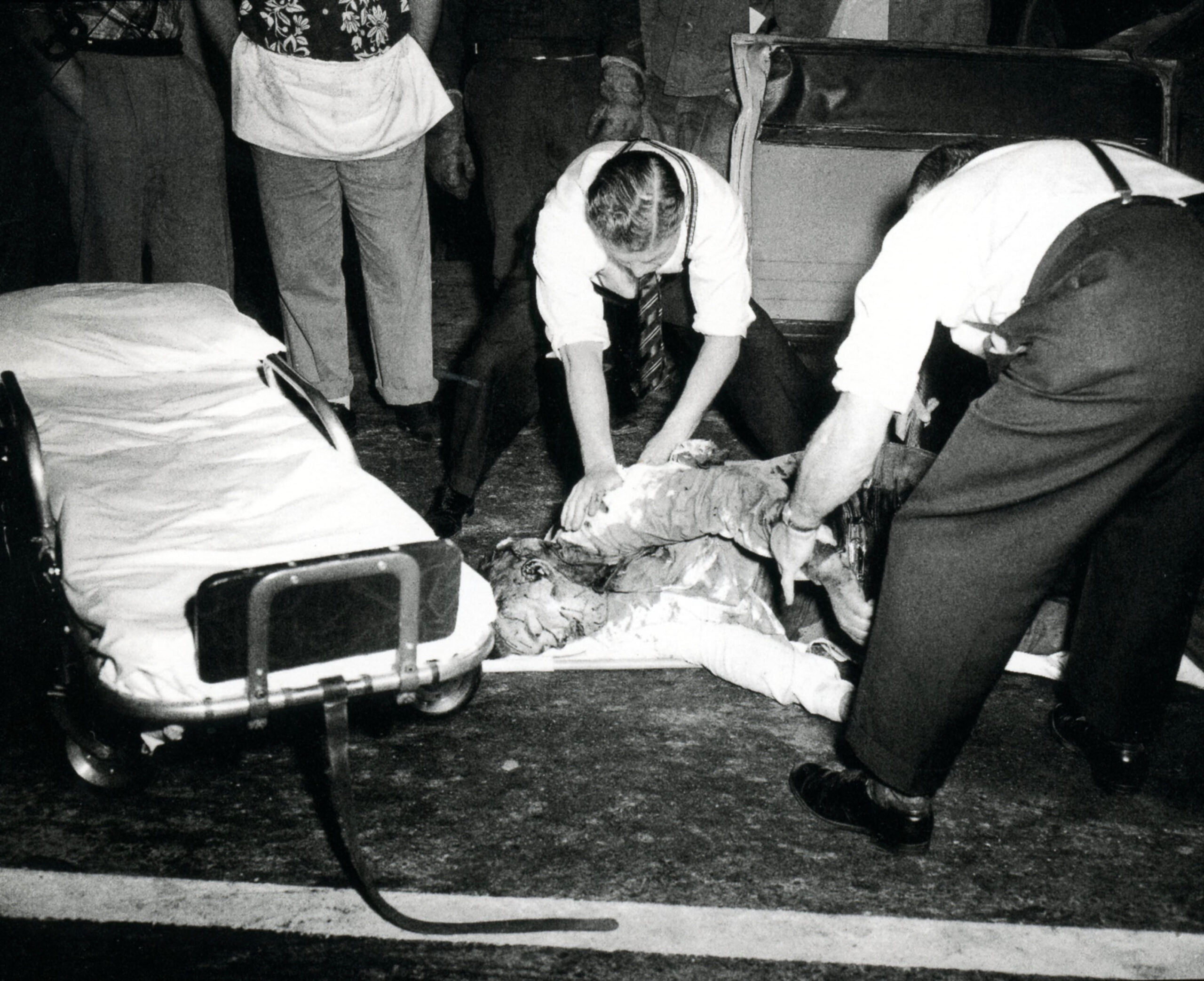
One of my favorite books is Death Scenes: A Homicide Detective’s Scrapbook. It is exactly what it says it is: a bizarre and oft-disturbing scrapbook collected over the years by Los Angeles area police detective Jack Huddleston, whose career spanned from 1921 to the early 1950’s. Here’s a famous entry:
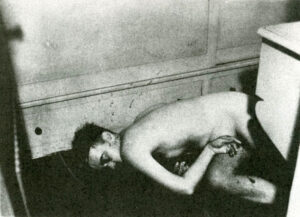
PAUL BERN JEAN HARLOW. HUSBAND.
SUICIDE. “GUN”?
Wikipedia tells the story:
Paul Bern (born Paul Levy; December 3, 1889 – September 5, 1932) was a German-born American film director, screenwriter and producer for Metro-Goldwyn-Mayer (MGM), where he became the assistant to producer Irving Thalberg. He helped launch the career of Jean Harlow, whom he married in July 1932; two months later, he was found dead of a gunshot wound, leaving what appeared to be a suicide note. Various alternative theories of his death have been proposed. MGM writer and film producer Samuel Marx believed that he was killed by his ex-common-law wife Dorothy Millette, who jumped to her death from a ferry two days afterward.
Two months after marrying Harlow, on September 5, 1932, Bern was found dead from a gunshot wound to the head in their home on Easton Drive in Beverly Hills, California. The coroner ruled Bern’s death a suicide.
Police discovered a note at the scene that read as follows:
“Dearest Dear,
Unfortuately [sic] this is the only way to make good the frightful wrong I have done you and to wipe out my abject humiliation, I Love you.
Paul
You understand that last night was only a comedy”
Authorities viewed this as a suicide note signed by Bern. To the police, and before a grand jury, Harlow’s only statement was that she “knew nothing.” She was made an executor of her husband’s estate by Judge May Darlington Lahey. She never publicly spoke on the matter, and later died of renal failure (caused by a childhood bout of scarlet fever) in June 1937 at the age of 26.
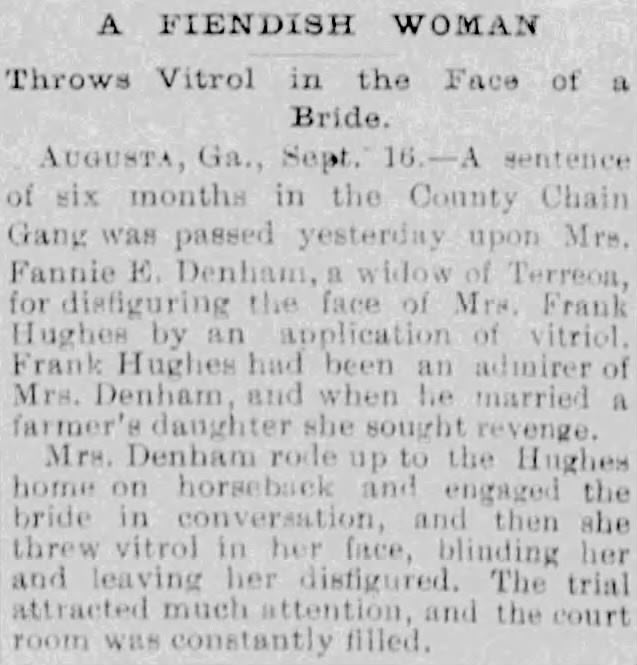
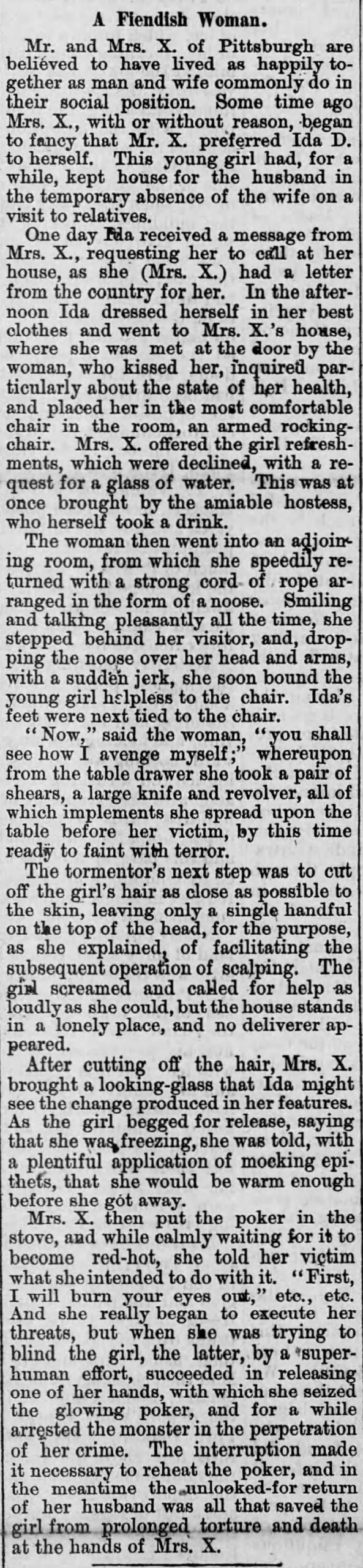
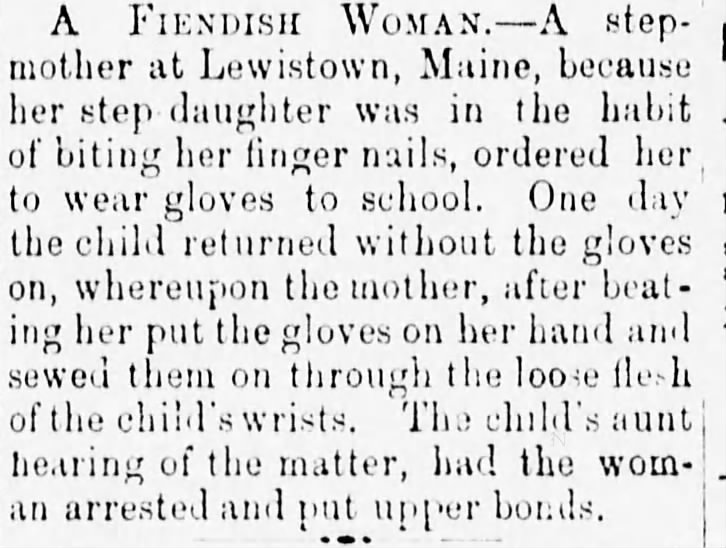
Garretdom: Fiendish Woman Du Jour!
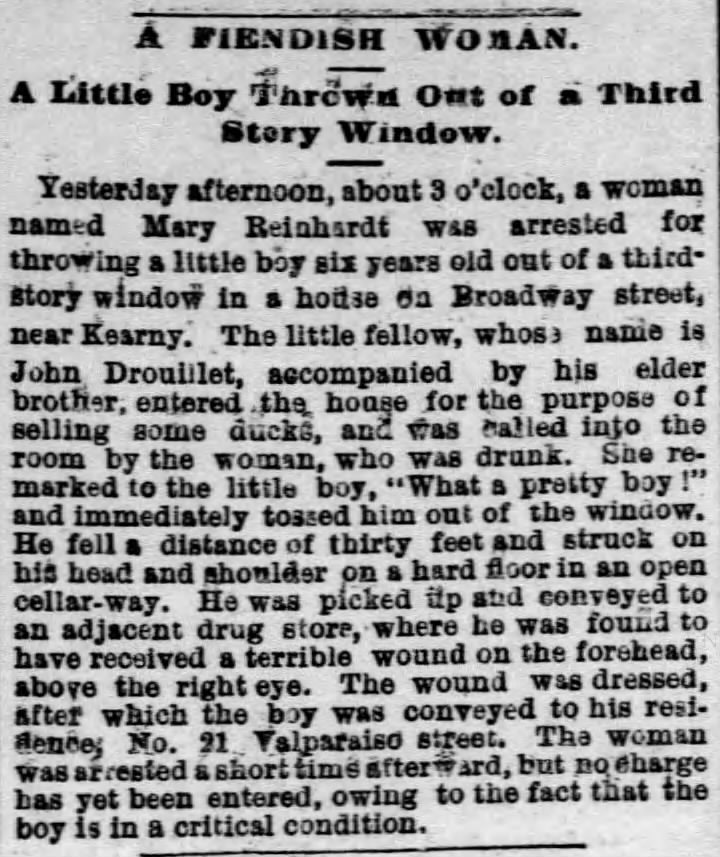
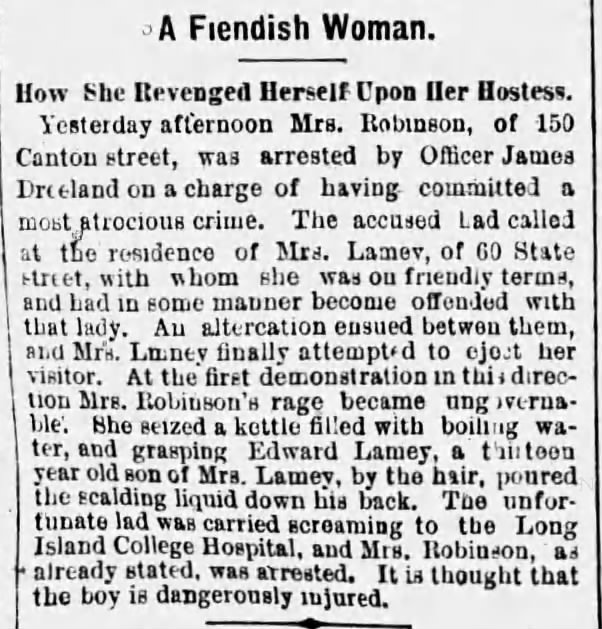
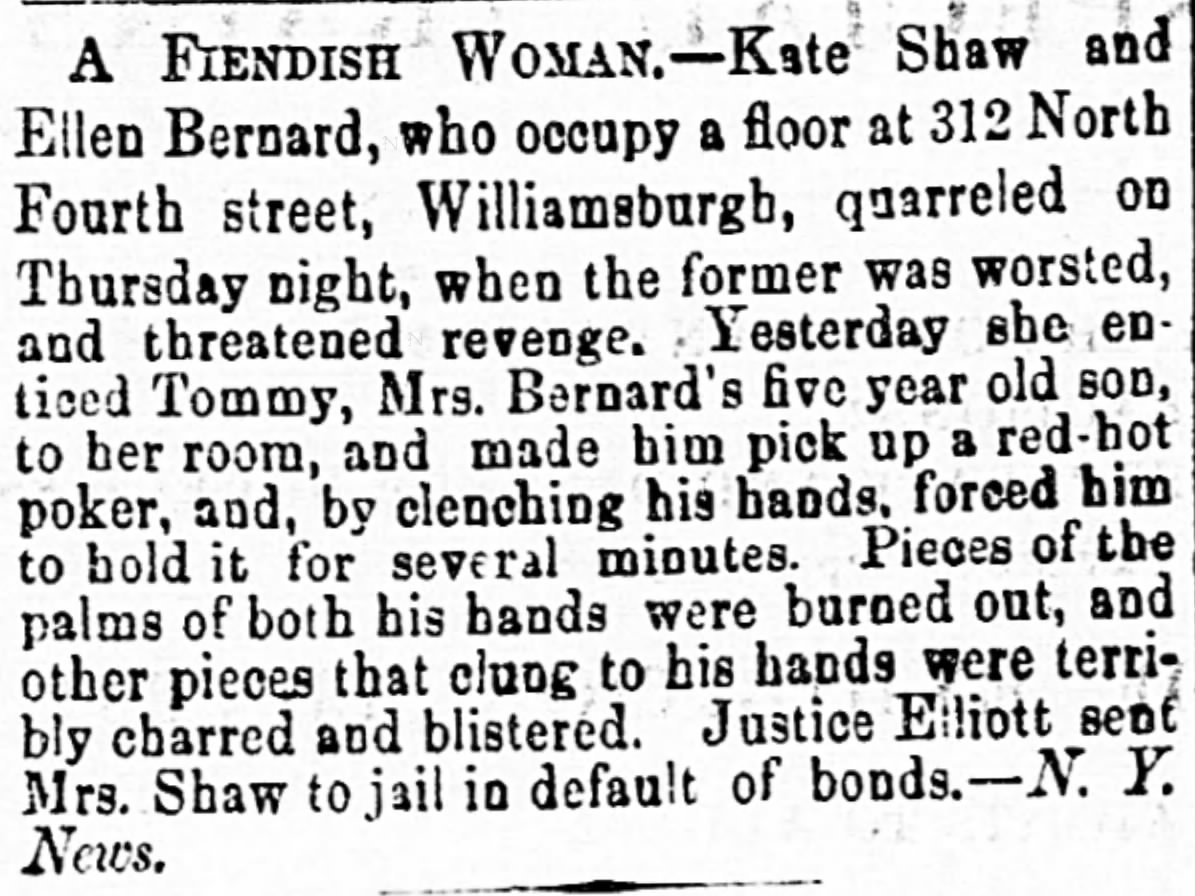
Here’s another in the series of newspaper articles entitled, “A Fiendish Woman.” This one comes from the November 7, 1873 issue of The Chicago Evening Mail.
A FIENDISH WOMAN.
She Assassinated the Wife of Her Paramour—An Atrocious Crime.
From the Detroit Free Press, Nov. 4.
On Tuesday last a man named Lyman Arnold, a business man at Avoka, Steuben County, N.Y., left the town without informing his wife or friends of his departure, and before night it was discovered that he had forged notes and checks to the amount of $900, and obtained the cash on them. He was the husband of a very estimable woman, his second wife, and is the father of four or five children. From some words he let drop the day before it was thought that he had started for Detroit, and a telegraph was sent here. The Chief of Police gave the case to Detective Bishop, and the detective began working it up. After sending the telegram, the route taken by Arnold was more exactly ascertained, and Deputy Sheriff E. B. Higgins, of Avoka, started on the trail. He was fortunate to find the forger at Niagara Falls, just as he was preparing to come West, and he took him back to Avoka, arriving there Thursday to find that a cold-blooded and fiendish murder had been committed during his absence. Living in the village was a young woman named Emeline Tower, who had once worked for Arnold as a domestic. There was talk that the two were more intimate than they should have been, and the village gossip had created unpleasantness in Arnold’s family, so that Miss Tower did not visit the house, and was not on speaking terms with Mrs. Arnold. There was, however, no suspicion of a separation between man and wife, or of the horrible crime to grow out of the scandal. Arnold was supposed to be an honest man, and there were those who took his side and defended him.
Wednesday night about midnight Mrs. Arnold, who was sleeping alone, was aroused by having a bullet sent into her head, which passed out of her mouth. She had been sleeping soundly, and the first intimation of danger was the bullet in her face. As she sprang up the person in the room fired two more shots, both taking effect in Mrs. Arnold’s body, and both producing fatal wounds. There was no light in the room, but in the darkness Mrs. Arnold heard the rustle of a dress and discovered a female figure. As soon as the wife fell back dying this figure fled. It was some time before any of the children came down stairs, they having been chloroformed, as was afterward ascertained. They aroused the neighbors at once, and the dying woman made her statement about the female figure, though at the time it was thought she was out of her mind and was speaking at random. It was found that the person who committed the deed had effected entrance by climbing up on the summer kitchen and then raising one of the chamber windows of the house. Miss Tower knew of this route, but no one else outside of the family. Thursday morning, after the murder had become known throughout the village, and after she had discussed the affair in common with others, Miss Tower took the cars for Detroit. This circumstance in connection with the hint dropped by Arnold that he was coming this way, led to the belief that the two were connected with the murder, and were going off together. Another telegram arrived asking that the woman be watched. She arrived here Saturday morning, and registered herself at the Cass House under the name of Mrs. Hunt. The same morning a trunk belonging to Arnold arrived by express, marked “Mrs. L. Hunt, Cass Hotel, Detroit,” indicating that the pair had arranged their plans together, and were to meet here.
Arnold, of course, did not reach here, being under arrest. The woman waited until Saturday, and then, perhaps thinking that he had been captured, she took the train to Dexter, and from there drove out to her uncle’s, seven miles north, in the Township of Lindon. Bishop had kept track of her movements, and, when Sheriff Higgins arrived here Saturday night, the detective was ready to go with him. Sunday they went to Dexter, and then, procuring a carriage, drove to Lindon, reaching the house where Miss Tower was stopping two hours after the family had retired. She was called up and arrested, but was the least excited of the three, bearing herself coolly, and not even exhibiting any curiosity to know the charge against her. In her trunk was found a revolver with three empty chambers, and the ball brought along by the Sheriff from the scene of the murder was an exact fit for the weapon. Further than this, she had a bottle partly filled with chloroform. On her way into the city she was informed of the murder and the arrest of Arnold, but she had few questions to ask, no excuses to offer for her conduct, and up to yesterday noon, when she started for New York, she had not shed a tear.
The woman is 26 years of age, of medium height, and quite handsome. One to look at her or to study her face would never dream that she had the heart of a fiend. The Sheriff is positive that she is the midnight stranger who did the shooting.
The Saturday night previous to the murder, when Arnold was at home, someone entered the house, chloroformed the family, and went out without creating an alarm or removing anything. It is now thought that he and Miss Tower had planned the murder for that night, but that after entering the house her courage failed her, or Arnold asked for further delay. He had been getting ready for flight two weeks previous, and had his notes and checks forged, presented and paid so quickly and quietly that there was no time for detection. He intended to start for Detroit Tuesday, but he missed the train and then had to alter his course for fear that he would be pursued and arrested for his forgeries. There was nothing to have prevented the pair from eloping together and journeying wheresoever they desired, and this fact makes the murder stand out in a more brutal and bloodthirsty light.
The wife had been very patient under the scandal, clinging to her husband in spite of all.