The Brutality of a New York Policeman, Who Kills an Old Man.
NEW YORK, Oct. 8.—Max Aronson, fifty years old, a Hester-street grocer, was brutally clubbed by Policeman Wood, of this city, in his store on Wednesday last and died to-day. A Coroner was summoned to take his ante mortem statement, but found the old man unconscious and dying. According to the statement of a son and the physician, the clubbing was one of the worst cases of police brutality reported for years. They say that a boy tried to steal some fruit, but was ordered away by the old grocer. The boy’s mother interfered and created a row. Policeman Wood took the woman’s part, and accused Aronson of striking her, following his words by clubbing him. The skull was fractured. Two sons interfered, and driving the officer away, called a physician.
While the physician was caring for the old man, Policeman Woods returned with another officer, and brutally clubbed the old man again. The two were driven out, but returned and took the old man away from the physician, and locked him up with the whole family for forty-five hours. The old man was not allowed medical attendance. After their release on bail Max Aronson began to sink, and died to-day. The policeman is under arrest.
Culled from the collection of The Comtesse DeSpair – 1886 Morbid Scrapbook
Incidentally, I tried to find out whether the killer cop was ever punished for his crime, but I could not. I highly doubt it.
A little boy named George Killian, aged six years, lost his life on Thursday last under most painful circumstances. In company with a younger brother he was playing upon a plank across the flume of Engle & Co.’s mill, from which it is supposed he fell into the water. The smaller boy missed him, and supposing he had stolen away, ran off in search of him. His inquiries excited alarm and Mr. Engle caused the gate to be closed, when it was found to be obstructed. The mill was stopped by choking the stones, and upon search, the body — except one leg, which had been severed and floated away — was found lying upon the top of the wheel, which is of the Turbine pattern, and has a lateral motion. It is supposed that the leg was forced into one of the buckets — they being too small to receive the whole body — and by contact with the case, in which the wheel revolved was crushed off. It was not found until after the body was interred. Coroner Barnes held an inquest which resulted in a verdict of “accidental death by drowning.”
Culled from the August 1, 1872 issue of the Mower County Transcript (Austin, Minnesota) as quoted in the excellent compilation book Coffee Made Her Insane.
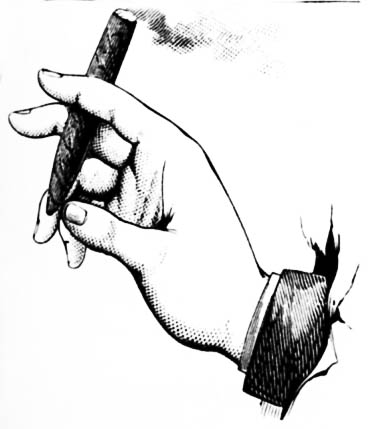
LAFAYETTE, Ind. Oct. 3.—A horrible and fatal explosion occurred at Bringhurst, Carroll county, on Friday. A man named Britton came to the store of Shanklin & Kearns for some powder. Mr. Kearns, with a lighted cigar in his mouth, poured out the powder from a large can into the scales. In setting down the can the cigar was knocked from his mouth into the can of powder, which exploded with great violence, tearing out the front part of the building and scattering the goods into the street. It was a fearful wreck. Mr. Kearn’s arm was broken in two places, his shoulders were dislocated, and his head and face were burned in a frightful manner. He died in a few hours after intense suffering. Britton had both arms broken and was terribly burned. His injuries are fatal.
Culled from the collection of The Comtesse DeSpair – 1886 Morbid Scrapbook
HARTFORD, Conn., Oct. 4.—Henry Hotchkiss, a musician, aged thirty-five, has for some time been in trouble with his wife, from whom he is supposed to have separated. They had two children. Yesterday afternoon at two o’clock they met on Market street. He drew a revolver and fired two shots at her, one of which took effect in her head and the other in her back. She died in a few minutes. Hotchkiss then fired one shot into his own head, but the wound inflected is thought to be but slight. He was taken to the hospital. The tragedy has caused great excitement.
Culled from the collection of The Comtesse DeSpair – 1886 Morbid Scrapbook
Follow-up: Mr. Hotchkiss did, indeed, survive (from the March 4, 1887 issue of The Meriden Journal):
STATE PRISON FOR LIFE.
The Sentence of Henry S. Hotchkiss for Murdering His Wife in Hartford.
At 4:30 yesterday afternoon Henry S. Hotchkiss was brought before Judge Torrance in the Hartford Superior Court room. S. F. Jones, counsel for Hotchkiss, repeated the story of the shooting of his wife Etta, by the prisoner, and made the plea that Hotchkiss was insane at the time of the shooting. He claimed that insanity was caused by the unfaithfulness of the prisoner’s wife. He was ready to plead guilty of murder in the second degree. Judge Briscoe of counsel for the prisoner made a similar plea. State Attorney Hamersley said that it was questionable in his mind whether the jury would convict of murder in the first degree, but it would have no doubt of a verdict of murder in the second degree. As far as he was concerned he would accept the plea and leave it wholly with the court to decide as to the acceptance. The court agreed to accept the plea and Hotchkiss was put to the plea and pleaded guilty to murder in the second degree. Judge Torrance then pronounced sentence that he be confined to the Connecticut state prison during his natural life.
The crime for which Henry Hotchkiss is consigned to a living death was the murder of his wife, Etta Hotchkiss, on October 4, 1886. On that day, while Mrs. Hotchkiss was walking on Market street in company with another woman, she was accosted by her husband, but refused to speak to him. Then the man pulled a small revolver from his pocket and fired two shots directly at the woman’s back. Both bullets struck her and she staggered into a store, fell to the floor and died instantly. As soon as Hotchkiss saw the result of his desperate work, he shot himself in the head, but only inflected a flesh wound. The cause of the murder was jealousy, aggravated by Mrs. Hotchkiss’ alleged improper behavior. Hotchkiss has two children, who at present are with friends at New Britain.
When a woman adopts a fad, says the New York World, she enters right into the spirit of the thing and it becomes almost a mania with her for the time being.
Generally the pretty little whim appears [sic] to her artistic nature or is something so ultra-fashionable that it delights her very soul.
The latest and most erratic fad which has numerous devotees in this city is that set in vogue by a popular young lady, who certainly possesses a strong “creepy” vein in her composition. Nothing so delights this eccentric creature as to gaze for hours upon bodies in the Morgue.
A theatre party with a lunch at Delmonico’s has no charm for her compared with the inexpressible joy attendant upon a visit to the Morgue.
At all hours of the day she can be found at this uncanny spot.
The other day this same artistic woman purchased a Kodak, which is now her constant companion as she gayly wends her way towards the Morgue.
She takes pictures, sometimes singly, sometimes in groups.
These photographs are not wasted by any means, for they are used in a decorative manner. Many of them are elaborately framed and occupy conspicuous positions in her boudoir. Among the odd things which are used to furnish this elegant apartment is a coffin. It now stands in one corner and acts as a cabinet. Small shelves have been fitted in, upon which rests certain relics very dear to the owner. They include such articles as a piece of silk, all that now remains of some fair woman’s shroud, a set of teeth elaborately filled with gold, a lock of hair and a wedding ring. It need hardly be added that her room is not the most cheerful place one could enter.
Nothing can be conceived which is more incongruous than a little banner hanging in her room upon which are written the words, “sleep sweetly within this quiet room oh, thou, whoe’er thou art.”
One eminent physician, who is in possession of the above facts, said that he considered it a mild form of insanity: “Yet,” said he, “eccentricity is rather the better word to use in describing this latest craze.”
Whatever it may be termed the interesting fact remains that the “fad” has many adherents among women, who pronounce it “awfully sweet.”
From the collection of The Comtesse DeSpair 1891 Morbid Scrapbook
ATTEMPTING TO SACRIFICE HERSELF SHE NEARLY BURNS AN ALMSHOUSE.
PORTSMOUTH, N. H., Aug. 1.—The city almshouse came near being burned about 3 o’clock this morning. It appears that a partially insane inmate named Isette Spiuney, aged about 68, took her feather bed, with all her clothing but one dress, together with a quantity of kindilings [sic], piled them on a chair in the corner of her room, and then set fire to them. The smoke awoke a sleeper in the apartment above, and when Overseer Shannon and his assistants burst into the room the flames had gained considerable headway. The woman was in a nude state, being badly burned about the stomach, chest, head and arms, and nearly suffocated. A delay of a few seconds more would have killed her. A detail of men was employed with buckets of water to quench the flames. which was accomplished only after the apartment had been badly scorched. On questioning the woman as to the cause for the act, she stated that as Christ was crucified, the spirits had prompted her to self-cremation, that being, she insisted, her intention when she set the fire. It was a narrow escape for the inmates of the almshouse, of whom there are many.
From the Collection of The Comtesse DeSpair
The 1879 Morbid Scrapbook
A very Tragical Accident happened at Water-Town, the beginning of this Month, an Old man, that was of somewhat a Silent and Morose Temper, but one that had long Enjoyed the reputation of a Sober and a Pious Man, having newly buried his Wife, The Devil took advantage of the Melancholly [sic] which he thereupon fell into, his Wives discretion and industry had long been the support of his Family, and he seemed hurried with an impertinent fear that he should now come to want before he dyed, though he had very careful friends to look after him who kept a strict eye upon him, least he should do himself any harm. But one evening escaping from them into the Cow house, they there quickly followed him found him hanging by a Rope, which they had used to tye their Calves withal, he was dead with his feet near touching the Ground.
Culled from the very first issue of PUBLICK OCCURRENCES, Both FORREIGN and DOMESTICK, Boston, Thursday Sept. 25th, 1690.
The Sad Experience of an English Woman Who Went Crazy After Her Husband took a Second Wife.
Between the two evils, Mormers [sic] and Chinamen, which are allowed the rights of suffrage in America, it is difficult to say which is the lesser. If the Chinamen are offensive, the Mormons are obnoxious and so on through the category. A most pitable [sic] case of Mormon cussedness, is shown in the following letter to the New York Sun, from the pen of a Salt Lake gentleman:
An honest-looking Englishman named Mower arrived here a few years ago with his wife and three small children, and settled at Brigham. The man was industrious, but he appeared to be something of a fanatic in religion. It was plain that the Saints had got a pretty firm hold on him. His wife was a fair-haired, rosey-cheeked little woman, and their children were delecate [sic] and attractive. The wife and mother went through the ceremony of joining the church after her arrival. The husband had been received into the fold before he left England. They got themselves a home, and appeared happy enough, until the husband, over-persuaded by an elder of the church, determined on taking another wife. The woman selected was a new arrival from Denmark who could not speak a word of English, and for whom it was the special desire of the church to get “anchored” here. Mower was the man who was expected to marry her, and marry her he did. His wife held out strenuously against the woman for some time, and refused to live under the same roof with her, but at least under the pleadings and threats of the dignataries [sic] of the Church and the representations of the husband as to his own poverty and inability to provide two homes, she consented. After that she began to appear like another woman. Her hair became silvery, her form wasted, and her eyes were bright and glittering. She wandered over the country a great deal with her little ones, and could be seen day after day on the roadsides with her little ones, caressing and weeping over them. Sometimes in pleasant weather she did not return to her home for days, and when she did she would have the children decked out in fantastic wreaths and flowers gathered by her own hands in the valleys. Her husband followed her, and tried to persuade her to return and be herself, but to no purpose. Then he locked her up or took the children away from her. She would find them again, and together they would return to the open country. All were subdued and sorrowful, and yet the childishness of the mother was just as pronounced as that of her children. She would run with them, kiss them, build little dams for them in the brooks, construct playhouses for them of stone, weave garlands, and deck herself and them. If they cried, she gathered them to her, and wept with them, and if they laughed she chided them.
Finally her mood changed, and, instead of delighting in rambles with the little ones, she became absorbed in a desire for vengeance. She would steal up stealthily to the house which was hers no longer, and make assaults on the woman who had usurped her place. Once she set fire to the premises and then fled. On another occasion she took her children and was absent so long that search was made for her. After three or four days she was found several miles from home, almost dead from hunger, and the children weak and emaciated from the same cause, and all crying bitterly. She had dug small holes in the ground, which she called their graves and the little ones were waiting with her for the last dread summons. Three men found difficulty in overpowering her, despite her weakened condition, and the entire party were then conveyed to town and cared for. The children went to their father and the woman was placed in the asylum at Provo, where she is now.
Culled from the October 3, 1885 issue of the Great Falls Tribune, Great Falls, Montana.
It’s time for another ghastly tale from our troubled past, this one courtesy of Joy Kemnitz who sends a clipping from the November 5, 1868 issue of the The Sweetwater Forerunner, Sweetwater, Tennessee. As Joy says, “They really don’t pull any punches in the old article descriptions” – and that is why the Comtesse loves them so!
A Train on the O.&M. Rail-Road Blown to Atoms.
Special dispatch to the Louisville Journal.
CINCINNATI, Oct. 30.–One of the most horrible railroad accidents that has occurred in this vicinity for some time past, took place at Gravel Pit, a station distant about eighteen miles from this city, on the Ohio and Mississippi road last night about 8 o’clock. A special freight train left this city at 6:25 last evening in charge of Mr. Mills Howe, conductor, and Jos. Gardner engineer. Reaching Gravel Pit about 7 1/2 o’clock, the train was stopped on the main track for the purpose of taking in wood for the engine.
Shortly after the train stopped, while the brakeman was passing the wood aboard the tender, the engineer oiling the engine, the fireman piling the wood as it came on board, and the conductor and a party of little boys who had gathered about to see the locomotive standing alongside the engine, a powerful freight locomotive exploded her boiler with a report that was heard for miles around, and with such force that it killed the conductor, fireman, and one of the boys outright, and wounded two more of the boys, who have since died.–The engineer and a brakeman named Henry Howe, brother to the conductor, were also injured quite severely.
So terrible was the force of the explosion that the engine was shattered into fragments, some of which were blown to the Kentucky side of the river, a distance of nearly a mile, while others, large and small, have since been picked up around the scene of the accident within a radius of a thousand yards. The wood in the pile alongside was sent flying in the air in every direction, and a stationary engine used for sawing the wood and the house that enclosed it were blown to fragments.
The conductor was lifted up and thrown against the wood pile, struck in the face and body with several fragments of the boiler, and so fearfully mangled and burned by the escaping steam as to be almost unrecognizable. Both legs were broken and his body crushed to jelly, and his face and neck gashed and skull crushed. The fireman, John Malone, who was standing near the fire doors in a position to feel the full force of the explosion, was also horribly mangled and died instantly. His limbs were broken, body covered with cuts and bruises, and his skull blown off and brains spattered all over the river side of the water tank.
One of the boys named John Smith, son of one of the employees of the road, residing at the gravel pit, was blown a long distance of 300 yards against a gravel bank and instantly killed. He was about twelve years of age. His brother, a few years younger was also blown a long distance, together with the flying wood, and so badly injured that he has since died. The boy, Thos. Murphy, about fifteen years old, was lifted up and thrown a distance of fifty feet against a wood-pile, which fell on his body, completely hiding it from view. He died in a few minutes after being taken from the debris. His little brother, about six years of age was blown a distance of forty feet into a lot of tall weeds, where he was found crying lustily, but slightly injured.
Mr. Gardner was knocked down and badly injured in the head, shoulder, and hip.
Henry Howe, the brakeman, had his hip and knee crushed, and received internal injuries, which, it is feared, will prove fatal. Several other person were bruised by the flying fragments. The trucks of the engine were not moved from the track, nor the tender moved more than three feet backwards. the force seems to have acted from below, lifting the boiler up and scattering the fragments in all directions.
Culled from the Thursday, August 6, 1896 issue of The World newspaper (New York, New York).
SLAIN BY HER SISTER.
The Girl Was Mad and Chopped Her Head to Pieces While She Slept.
HACKED UNTIL SHE WAS TIRED.
Then Washed Her Hands, Slipped from a Window and Told the Police How She Did It.
ALICE HEANEY WAS HARMLESSLY INSANE.
Kate Larkin, Her Sister, Had Been a Mother to Her for Years–Now She Is Dying in a Hospital.
For several years poor Alice Heaney has been regarded as “harmlessly insane.” Yet at 3 o’clock yesterday morning, lighted only by the moonbeams which streamed in through the open windows of the little home at No. 123 Classon avenue, Brooklyn, she attacked her sleeping sister with an axe, and hacked the defenseless head into an almost unrecognizable mass.
The victim is Mrs. Kate Larkin, a hard-working, self-supporting widow who for years had surrounded the demented girl – her sole blood relative – with devotional care and a mother’s love. A spark of life still lingered in the terribly mutilated body after the mad sister had thrown away her weapon through sheer weariness, but the physicians pronounce Mrs. Larkin’s case as hopeless.
Sergt. White was nodding half asleep at his desk in the De Kalb Avenue Police Station at 3:30 A. M. when a small, pale-faced woman slipped quietly in from the street. The early visitor was well but plainly dressed in a muslin skirt and fresh shirt waist. At first glance there was nothing unusual in her appearance.
“I wish to give myself up,” said the woman quietly, very much as another would have said, “Good morning.”
“You do, hey?” queried the sleepy sergeant, thinking that his visitor was about to ask for a night’s lodging. But the girls’ answer awoke the officer like an electric shock.
Told of the Murder
“You see, sir,” she said, in that even, unemotional tone. “I have just killed my elder sister with an axe. You will find her dead at home at No. 123 Classon avenue.”
“Do you know what you are saying, Miss?” demanded the astonished policeman.
“Yes, indeed,” replied the visitor, smiling at the bluecoat’s surprise. “I killed her because I feared her. She was cross to me yesterday and threatened to cut my throat. Before I went to bed last night I prayed for her – oh, how earnestly! We sleep together, you know, and at 3 o’clock this morning I awoke to find the moonlight pouring over the bed. It was bright and beautiful. I grasped at the moonbeams. She stirred and muttered in her sleep.”
The light of madness came into the shifting eyes of the queer little creature as she leaned far over the sergeant’s desk and whispered the balance of her terrible story.
“Yes, she stirred,” continued the woman, “and I made up my mind that she should die. So I just slipped out of bed and stole barefooted into the yard. There I found the axe. It was a great big one, with a blade as keen as a razor. Going softly in to our sleeping room, right up tot he bedside, I stood over my sister. The moonlight was full upon her and showed me where to strike. She shrieked at the first blow, but I cut her down again and again. She had to die. I did not dare to let her live.”
The Sergeant Shuddered.
Sergt. White is a well-seasoned officer, but the mad woman’s story, as he afterwards confessed, brought out the cold perspiration.
Detaining his visitor he telephoned the facts to the Clermont Avenue Station in which precinct is the Classon avenue house.
Sergt. O’Connell sent Policemen Gallagher and Lynch to investigate. They found the little two-story frame house tightly closed, its inmates seemingly fast asleep.
It required a dozen tugs at the doorbell to get a response from Mrs. Mary Bodie, the aged owner of the little cottage, who sleeps on the top floor. She nearly swooned in terror when the policeman bluntly explained the object of their visit.
“It must be a mistake,” she gasped. “Mrs. Larkin and her young sister Alice occupy my basement. The girl is silly, but harmless, and the widow is more than a mother to her.”
Reluctantly the old lady piloted the policeman down the narrow stairs to the basement. As the aged woman and the two men stood in the lower hall groping in the darkness for the door of Mrs. Larkin’s room, they caught a faint sound, as of dripping water.
Gallagher entered the front room used by the sisters as a sleeping apartment and stopped short just within the threshold. The sight that brought him to a standstill would have staggered most men, had their nerves been ever so strong.
On the bed, in the full light of the moon, lay Mrs. Larkin. Blood ran from a score of terrible wounds on head and face, and dripped from the saturated bedding to the uncarpeted floor. The patter of the red drops was the sound that had caught the attention of the policemen as they stood in the outer hall.
The axe with which the butchery had been done lay on the floor close by the bed, its heavy blade clotted thick with blood. Mrs. Larkin had evidently made no struggle for her life – the first crushing blow had rendered her unconscious.
Her mad assailant, satisfied that her victim was dead, had deliberately washed the blood stains from her hands and, after dressing with considerable care, had left the house by a rear window connecting with an alley and the street. She had then walked straight to the De Kalb Avenue Station, three blocks away, and made her startling confession to the sleepy sergeant.
Mrs. Larkin still lived when the police found her, but the pulse of life was beating faintly. Policeman Gallagher sent in a hurry call that brought an ambulance in hot haste from the Homeopathic Hospital.
The unconscious sufferer was taken to that institution, where House Surgeon W. W. Blackman found three separate and distinct fractures of the skull, each of itself almost inevitably fatal. One terrible stroke of the axe had cut out the woman’s right eye and smashed the bridge of her nose. Fifteen other blows had each left a deep scalp wound covering the head with a net work of mutilations.
Identified Her Sister.
Mrs. Larkin partially regained consciousness an hour after reaching the hospital, and managed to identify the mad sister as her assailant. Then she sank into semi-consciousness and throughout the day lay writhing in convulsions, which grew steadily weaker as her life ebbed away. The physicians do not regard her recovery as possible.
Alice Heaney was taken before Justice Teale late in the day and committed, to await the result of her sister’s injuries. She was perfectly cool and self-possessed, and retold her gruesome story with few additions.
“I killed her,” she said, “because she had beaten me and had threatened to cut my throat.”
The prisoner showed no sign of regret for her mad act until she was led from the court Raymond Street Jail. Then, turning to a court officer she whispered, in a frightened way:
“I meant to murder her, you know, but I’m sorry now that I did it.”
Mrs. Larkin was the wife of Perry Larkin, an old-time professional ball player who drank hard and embittered her life. She was finally forced to leave him and make a home for herself and sister Alice. Two years ago she took possession of the little basement in Classon avenue, and began her single-handed struggle for bread.
Alice Had Religious Mania.
Alice, now twenty-two years old, has from early childhood been known as queer. Once she was seized with religious mania and kept the neighbors so alarmed with her ravings and prayers that it became necessary to remove her to the Flatbush Asylum, but several months ago she was returned to her sister’s care as “harmless.”
Mrs. Larkin earned her living as a washerwoman, and won the respect and friendship of her neighbors by her indomitable energy and never-failing cheerfulness.
During the day preceding the tragedy Mrs. Larkin worked hard over her tubs, while the demented sister moved quietly about the little home, giving no sign of approaching madness. The sisters chatted pleasantly with neighbors until 9 P.M., and then retired, seemingly in perfect accord.
Alice, in her cell at Raymond Street Jail, passed a quiet day, but at nightfall a returning fit of madness seized her. Physicians were summoned from the Brooklyn Hospital, but they could do little for the frenzied woman. At a late hour preparations were being made for her removal to a padded cell.
Follow-Up from the August 13, 1896 issue of The Standard Union (Brooklyn).
SHE IS A LUNATIC.
Dr. King Examines Alice Heaney as to Her Sanity.
FINDS SHE IS CERTAINLY MAD.
THE GIRL MURDERESS WILL PROBABLY GO TO THE ASYLUM FOR INSANE CRIMINALS AT MATTEAWAN– MR. BACKUS APPOINTS LAWYER “BOB” ELDER TO LOOK AFTER HER INTERESTS.
An inquiry was held in the office of District Attorney Backus this morning by Dr. James S. King, of 146 McDonough street, who was yesterday appointed a commission to determine the mental condition of Alice Heaney, who on Aug. 5 assaulted her sister, Mrs. Kate Larkin, at her home, 123 Classon avenue, with an ax, inflicting injuries from the effects of which she died in the Homeopathic Hospital two days later.
Dr. Ira O. Tracy, assistant physician at the Long Island State Hospital, testified that the prisoner was an inmate of the asylum for six weeks in August and September, 1895. Her condition was that of an imbecile suffering hallucinations of sight, and that she frequently “saw saints and angels.” He considered her insane. Sergeant James P. White, of the Fourth precinct testified to the prisoner’s visit to the station house on Aug. 5, when she said her sister wanted to cut her throat, and she had hit her with an ax.
Patrolman Thomas F. Gallagher testified that he arrested the murderess. When the officer referred to Mrs. Larkin’s death the prisoner burst into tears, and said that was the first she had heard of her sister’s death.
Dr. King made a formal report to the effect that the prisoner was incapacitated of understanding the proceeding of a trial, and that it was dangerous to public peace and safety to have her at large.
She will therefore be committed to the insane asylum for criminals until the Grand Jury meets, in October next.